

By Erik Peterson, founder of Landopia. Full disclosure up front: I’m not a hunting guide, and I don’t scout game units for a living. I’m a land guy. I’ve sold a few hundred parcels across eight states, and the “how many acres do I need to hunt” question comes up on just about every buyer call I take. This is the answer I’ve put together from those conversations, and from watching which buyers end up happy with what they bought.
- The Real Question Isn’t How Many Acres
- The Base-Camp Model (5 to 10 Acres)
- The Huntable Parcel (10 to 20 Acres and Up)
- What Actually Decides Whether You Fill a Tag
- How to Scout the Public Land Next Door
- Matching Acres to the Game You Chase
- Using Your Parcel From Day One
- Three Real Setups That Worked
- Where Buyers Get It Wrong
- Common Questions
You’ve got a handful of hunting parcels saved in a browser tab, maybe a map open in another, and you keep circling back to the same question before you’ll let yourself click “contact.” How many acres do I actually need to hunt my own land? It feels like the thing you have to settle before anything else makes sense.
Here’s where it gets frustrating. Search it, and you get numbers all over the map. One forum swears you need forty acres minimum. The next guy killed a buck on five. A ranch broker tells you to think in sections. Not one of them is asking the question that actually matters, which isn’t how many acres, but what kind of hunt you’re trying to set up.
Mule deer hunter, whitetail guy, elk chaser, fella who mainly wants a good excuse to sleep in a wall tent every October? Y’all are in the right place. Let me give it to you plain: most buyers need a lot less land than they think, and the size that fits you comes down to one fork in the road, whether you want a base camp next to public land or a parcel you hunt on its own.
The Real Question Isn’t How Many Acres
Most folks asking how many acres to hunt are really asking something underneath it. They want to know whether a piece of ground will hold up a hunt. Will there be game on it or near it? Can I set up and get after it? Will I fill a tag, or just own a nice view?
Acreage is one piece of that, and it’s usually not the biggest piece. What matters more is how you plan to use the land, what you’re chasing, whether public land sits next door, what the terrain and cover look like, whether there’s water within reach, and what the tag and season rules are in that state. Get those right on ten acres, and you’ll out-hunt the fella with forty in the wrong spot. If you’re still building a mental picture of what these numbers even mean on the ground, it helps to get a feel for how big an acre really is before you compare parcels.
So flip the question. Instead of “how many acres do I need,” ask “will this land support the hunt I want to run?” That one change points you at the right parcel instead of the biggest one.
The Base-Camp Model (5 to 10 Acres)
This is where most hunting-land buyers should start, and it’s the setup I end up describing on most calls.
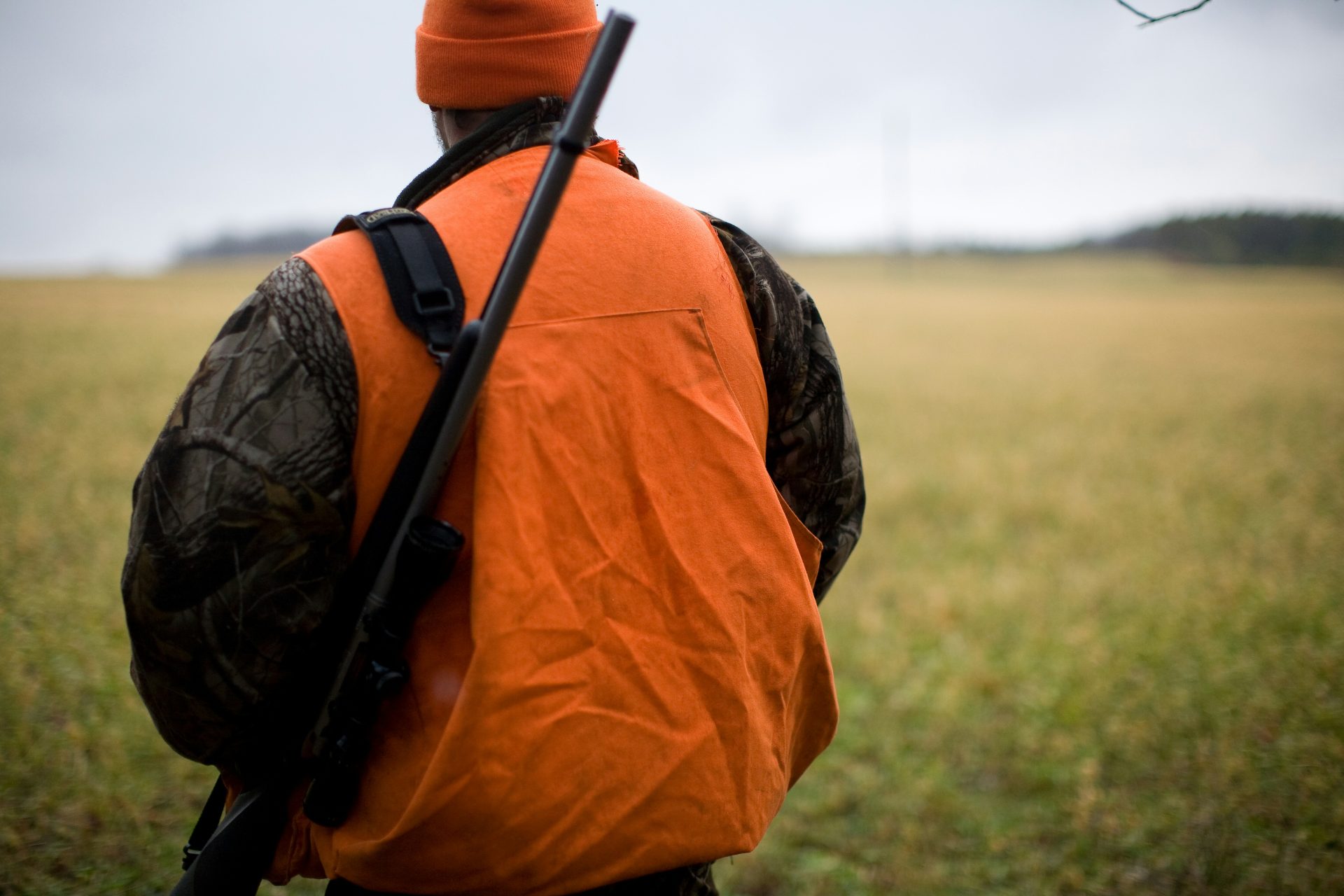
The idea is simple. You buy a small piece of your own right up against public land, whether that’s BLM, National Forest, or state ground, and that parcel becomes your camp. You park the truck, set up the tent or the trailer, glass the country around you, and hunt the public land where the game actually lives. If you want the full picture of what that looks like, here’s what a real hunting base camp is built to do.
Your parcel isn’t the hunt. It’s the launch point for the hunt, which happens on the hundreds of thousands of acres around it. A ten-acre parcel bordering half a million acres of public land beats a forty-acre parcel boxed in by private ranches every time, because you’re not hunting the size of your lot. You’re hunting a whole region, and your camp just happens to be the door you walk out of.
There’s a reason this pencils out. A small base-camp parcel costs less up front and less every month, and it gets you the same access to the country around it as a big parcel would. Most of the hunting buyers I talk to land here once they realize they’re not paying for the ground they hunt, they’re paying for a place to camp next to it.
What the Two Setups Actually Cost
| Setup | Typical size | Total to own | Monthly | Best for |
|---|---|---|---|---|
| Base camp next to public land | 5 to 10 acres | $10,000 to $20,000 | $130 to $190 | Mule deer, elk, anything spot-and-stalk |
| Huntable parcel in game country | 15 to 30 acres | $18,000 to $40,000 | $180 to $300 | Whitetail, stand and blind hunting |
Numbers move with the state and the specific piece, but that’s the neighborhood. On owner financing, most of our hunting parcels start with around $100 down, so the real question isn’t the sticker price, it’s which setup fits how you hunt. If you’re weighing how to pay for it, here’s how owner financing compares to a bank loan on raw land.
The Huntable Parcel (10 to 20 Acres and Up)
For some buyers in the right country, a bigger parcel can be the hunt itself, not just the camp.
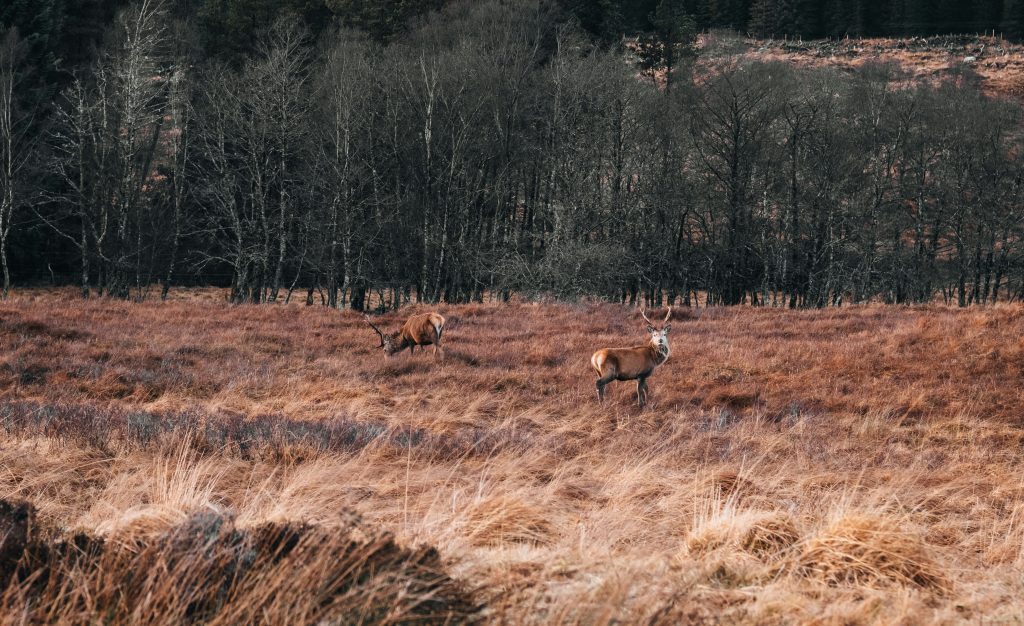
Picture twenty acres of sage and broken ground sitting inside a good game management unit. Deer move through country like that, and a patient hunter on a piece like that has a real shot from his own dirt. The land’s productive, so you’re not only sleeping there, you’re hunting it.
That works when the parcel sits in proven game country, when the terrain and cover actually hold animals, when water’s on it or close, and when it connects to or sits inside good opportunity. Miss those, and more acres won’t save you.
A bigger parcel also lets you build out a real hunt camp over time, with glassing knobs, stand and blind sites, a spot to hang and quarter an animal, and room to store gear. Just keep the day-one-versus-later line straight. You can scout every foot, mark your glassing points, and plan your season the day you sign, but the permanent build-out waits for payoff. It’s the same set of trade-offs that separate a good hunting property from an average one.
Here’s the part I’ll say straight. Even on twenty acres, filling a tag still comes down to more than size. You need game moving through, cover that holds deer or elk, low hunting pressure, water within reach, and terrain you can actually work. A twenty-acre parcel in dead country loses to a ten-acre parcel in good country, and it isn’t close.
What Actually Decides Whether You Fill a Tag
Acreage is one factor. These usually matter more.
Public-land adjacency is the big one. If your parcel touches public land, you hit the jackpot, because you’re tied into vast country and you’re not boxed in by your own lot lines. If you’re surrounded by private ranches instead, you’ll need more of your own acreage to make it work, since you can’t just step off your line and start hunting. It’s worth understanding exactly how BLM land works next to your parcel before you count on that access.
Terrain and cover come next. Mule deer hang on breaks and edges, whitetails hold in thick timber, and elk travel the ridgelines, so your ground needs the kind of cover that holds what you’re after. Ten acres of broken terrain with sage and draws is worth more to a hunter than flat, bare ground twice the size.
Water matters more than most first-timers expect. Game needs it, especially in dry country, and a spring, seep, or stock tank within glassing distance keeps deer close. Dry ground with nothing to drink for miles still hunts; it just holds fewer animals.
Access is the one people forget. Can you actually get to your parcel in season? Snow, mud, and rough roads are part of the deal out West, and a piece you can reach year-round beats one that turns to a bog every October.
Game density decides more than acreage. Some units simply hold more animals and hunt better than others, so read the state’s harvest reports, call the regional biologist, and learn where the game actually is before you buy. High density on a small parcel beats low density on a big one.
Tag and season rules set the ceiling on all of it. Every state runs its own tag system, season dates, and unit rules, and those shape what’s even possible. Check the specifics with the state wildlife agency for the unit you’re looking at before you put money down, because the parcel is only as good as your legal ability to hunt it.
One Edge Most First-Time Buyers Miss
A handful of Western states hand landowners a real advantage at tag time, things like landowner preference or landowner tags that can put you in your unit while a nonresident sits in the draw for years. New Mexico and Colorado are two worth a hard look. The catch for owner-financed buyers is that these programs generally want the deed in your name, which means after payoff, not while you’re still on terms. It’s not a reason to buy by itself, but if you’re deciding between two units, it can tip the scales. Confirm the current rules with the state wildlife agency, because they change from year to year.
How to Scout the Public Land Next Door
Your parcel is the base. The public land around it is the hunt, so learning to read that ground before you buy is worth more than another ten acres. You can do most of it from the couch.
Pull up a mapping app like onX or the state’s own hunt planner and drop the parcel on it. You’ll see the public-land boundary, the game management unit it sits in, and how much country you’d actually have to walk into. Then find the BLM field office or National Forest ranger district that manages that ground and call them, because they’ll tell you about access, road closures, and how hard the unit gets hunted. Read the state’s harvest statistics for the unit too, since success rates and animal counts are public and tell you more than any listing photo.
One last thing, and it’s the one that bites people. Check the boundaries twice. A parcel that looks like it borders public land can be a quarter mile off, and that quarter mile can be locked-up private ground you can’t legally cross. Verify it before you fall in love.
Matching Acres to the Game You Chase
Different animals need different room. Here’s how I’d think about it.
Whitetail
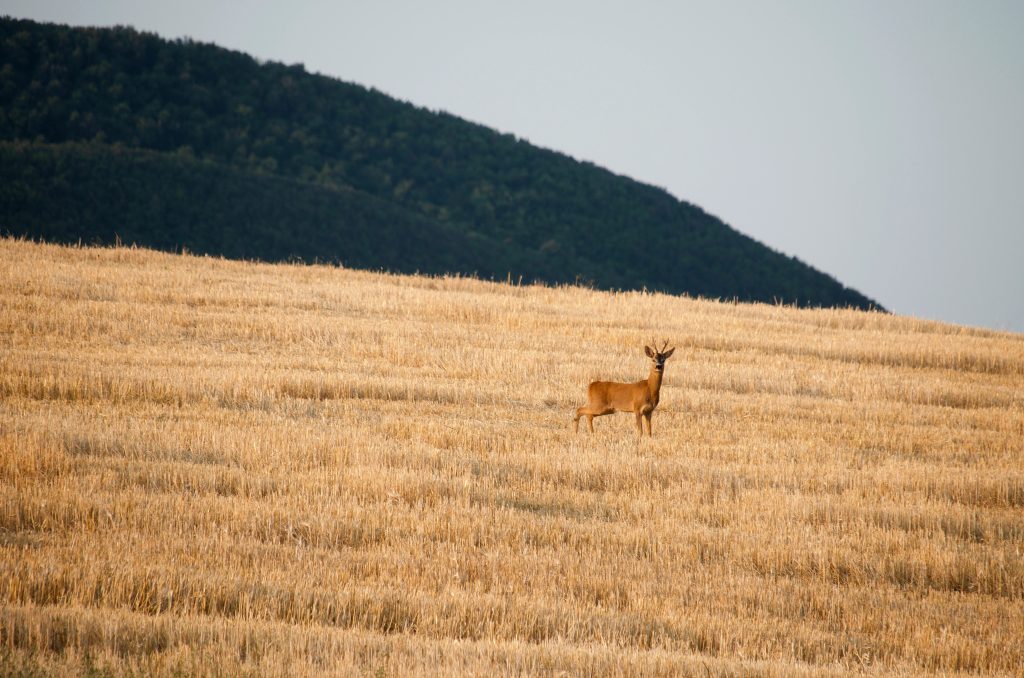
Whitetail are homebodies. They hold a territory and don’t range like mule deer or elk, so a productive fifteen-to-thirty-acre parcel with good cover can hold huntable deer on its own. If public land or a big timber tract sits next door, the base-camp model works fine on five to ten. Focus on cover, food, and bedding, and expect close-range hunting from stands and blinds. This is the one type of hunt where owning the ground you hunt is realistic on a smaller piece. Texas and Arkansas are classic whitetail country if that’s the hunt you’re after.
Mule Deer
Mule deer are spot-and-stalk animals that range wide and use open terrain, so success leans harder on public-land adjacency and terrain than on acreage. Five to ten acres next to public land is close to ideal, and if you want it all on your own ground, you’re looking at twenty-plus acres in open country with real glassing terrain. Think breaks, edges, and a high point to sit behind glass. Colorado, Nevada, New Mexico, and Arizona are the heart of it, and it’s worth reading a DIY guide to mule deer hunting land in the West before you narrow a unit.
Elk
Elk cover serious country and swing through a lot of elevation, so the base-camp model wins most of the time here. Five to ten acres as your hub next to public land does more for you than trying to own enough ground to hold a herd. If you go bigger, thirty-plus acres in proven elk country with elevation change and water is the range. The Colorado and New Mexico high country is where a lot of these hunts happen.
Using Your Parcel From Day One
You don’t wait until payoff to start hunting. You wait until payoff for the permanent stuff. Here’s the line.
The day your contract’s signed, recreation is yours. You can camp on your parcel the whole season, glass the public land from your high points, hunt the country around you, walk the ground and scout it, and set up temporary gear like a tent, an RV, or a portable shelter. No permission needed to hunt and camp your own dirt, as long as you follow state hunting regs. That’s the same set of day-one rights that come with any parcel you can use while you’re still paying for it.
Anything you want to leave standing on the parcel while you’re still on terms — a portable blind, a tree stand, a storage container, a temporary shelter, or T-post boundary markers, just takes a quick call to your Land Specialist first. Most requests get a yes. We just like to know what’s going on out there.
Once it’s paid off and titled in your name, the gloves come off. Drill a well, put in septic, build a cabin, set up permanent stand infrastructure, or live out there full-time if that’s the plan. Permanent improvements are a payoff-and-title thing, not a day-one thing, and keeping that line straight saves you a headache down the road.
Three Real Setups That Worked
Here’s how different goals turn into different acreage.
The base-camp mule deer hunter bought seven acres in eastern Nevada, right against BLM. He runs an RV base camp with a glassing knob on the parcel and hunts the 100,000-plus acres of public land around him. Total price around $15,000, roughly $150 a month. He’s hunted mule deer across that whole region off one small piece.
The whitetail hunter went the other way, fifteen acres in central Arkansas with mixed cover. He hunts the property itself off a couple of tree stands, and he added a small cabin once the land was paid off. Around $20,000 total, about $180 a month. He’s taken whitetail on his own land, no public ground required.
The elk hunter’s hub is ten acres in northern Colorado next to National Forest. Wall tent and a glassing setup, and he hunts the high country on the public land around him. Around $25,000 total, roughly $220 a month. The parcel is his elk camp, not his elk unit, and that’s exactly the point.
What do they share? Not one of them overpaid. Each bought the right acreage for how he hunts, each understood that public land or parcel quality mattered more than raw size, and each of them is hunting, not just owning.
Where Buyers Get It Wrong
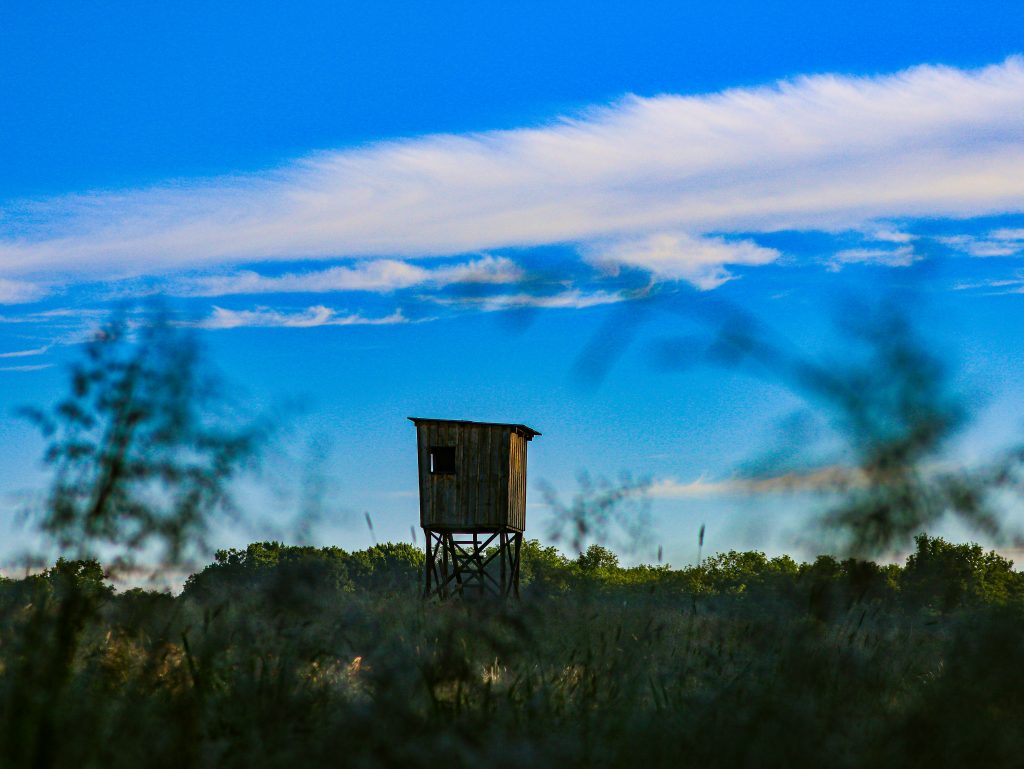
A few patterns show up over and over. The first is buying acres instead of location, chasing the biggest parcel a budget allows and ending up boxed in by private ground, when ten good acres next to public land would have hunted better. The second is skipping the access question, because a parcel you can’t reach in a snowy October isn’t much of a hunting parcel that month. The third is treating the parcel as the whole hunt, when on five or ten acres the animals live on the public land next door, so you buy for proximity, not for a herd of your own. The fourth is skipping the tag homework, since the best ground in the country does you no good if you can’t draw a tag for that unit. And the last one is assuming you can build the day you sign. Camp and portable gear are fine while you’re paying, but wells, septic, and permanent structures wait for payoff and title, so plan around that line.
Bringing It Together
If you don’t have your piece yet, and the acreage question is what’s kept you circling the same browser tabs, go look at owner-financed hunting land in Arizona, Arkansas, Colorado, Florida, Nevada, New Mexico, Oregon, and Texas. Most of our parcels start around $100 down with a monthly payment in the neighborhood of a streaming bundle, and you don’t have to figure out your whole setup before you sign. Find the piece that fits how you hunt, and one of our Land Specialists will walk you through how the financing works.
Common Questions
How many acres do you need to hunt whitetail?
Fifteen to thirty acres in good whitetail country will hold huntable deer on its own. You can drop to five or ten if public land or a big timber tract sits next door and you’re running a base camp. It comes down to cover, food, and deer density more than raw size.
What’s the minimum acreage to hunt?
There’s no hard minimum when public land is next to you. A five-acre base camp is fully functional if it borders BLM, forest, or state ground. If you need everything to happen on your own parcel, fifteen to twenty acres in good country is a realistic floor.
Can you hunt on 5 acres?
Yes, as a base camp with public land nearby. Not really, if you need the whole hunt to happen on those five acres. The model matters as much as the number.
Is public-land adjacency really better than more acres?
Most of the time, yes. A ten-acre parcel next to 500,000 acres of public land gives you more country to hunt than a fifty-acre parcel ringed by private ranches. Adjacency multiplies your ground. Raw acreage doesn’t.
How much land do you need to hunt mule deer?
For mule deer, lean on the base-camp model, so five to ten acres next to public land. If you want it all on your own ground, plan on twenty-plus acres in open country with glassing terrain. Mule deer range wide, so location beats size here.
How many acres do you need to hunt elk?
Elk cover big country, so a five-to-ten-acre base camp next to National Forest or BLM does more for you than trying to own a herd’s worth of ground. If you go bigger, thirty-plus acres in proven elk country with elevation and water is the range.
Can I put up a hunting blind or stand while I’m still paying?
Yes, with a quick call to your Land Specialist first. Portable blinds, tree stands, and temporary structures usually get a yes while you’re on terms. Permanent structures wait until the land’s paid off and the deed’s in your name.
Can I hunt my parcel while I’m still paying for it?
Yes. Hunting and camping are recreational uses you get from day one of signing, no permission needed, as long as you follow state hunting regulations. It’s the permanent improvements that wait for payoff.
Does owning land get me a hunting tag?
Not by itself, and not everywhere. A few Western states offer landowner preference or landowner tags that can help, but they generally require the deed in your name, which means after payoff. Check the current rules with that state’s wildlife agency.
Do I need water on the property to hunt it?
Not on it, but water within glassing distance helps a lot, especially in dry country. A spring, seep, or stock tank nearby keeps game close. Dry ground with no water for miles still hunts; it just holds fewer animals.
Is a bigger parcel always better for hunting?
No. A small parcel in great country with public land next door out-hunts a big parcel in poor country nearly every time. Terrain, cover, water, and adjacency decide it, not the acreage figure.
How do I figure out the right parcel size for my hunt?
Start with what you chase and where. Whitetail on your own ground can work on fifteen to thirty acres. Mule deer and elk usually want a base camp next to public land. Tell a Land Specialist your game, your state, and your budget, and they’ll help you match it.
The right number of acres isn’t the biggest number you can swing. It’s the number that puts you where the game already is, and sometimes that’s five, right next to a million.