In this guide
The Part of the Hunt Nobody Sells You
You already know the country. You've hunted that unit four seasons running, you know which ridge they come off at first light, and you know the two-track that saves you forty minutes when it hasn't rained.
What you don't have is anywhere to be at the end of the day. So it's a motel in a town thirty miles out, or a dispersed spot you share with whoever got there first, set up and torn down every single trip. Either way you leave. The country you know better than anybody is the one place you've never been able to stay.
Hunter, angler, overlander, fella whose wife has developed opinions about another season of motel receipts? Y'all are in the right place. A few acres beside ground you already love changes the shape of the whole season, and it costs less to start than most people assume.
What a Base Camp Parcel Actually Does
The parcel isn't the destination. It's the infrastructure.
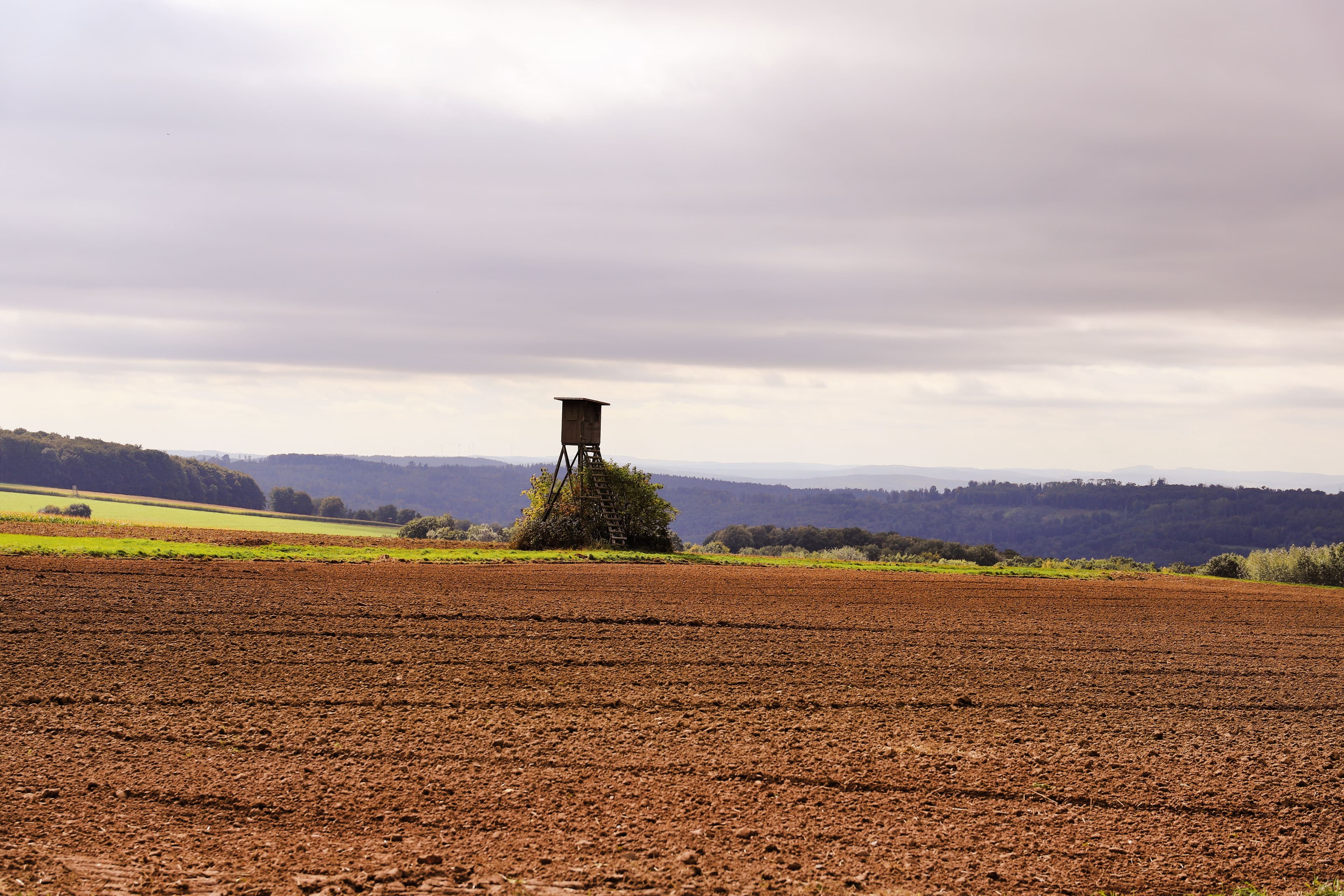
It's where the truck sits and the camper goes. Where the gear lives between trips. Where you glass the far slope with coffee in your hand and where you sleep instead of driving back out at dark. The hunt happens next door on BLM, Forest Service, or state ground, the same as it always has. What changes is that you stop being a visitor.
Five to ten acres does that job fine. Larger is good and it isn't necessary, because you aren't buying habitat. You're buying a location and a flat place to stand. The best base camp in a county is often the plainest piece of ground in it, which is also why you can afford it.
There's a second thing that happens, and buyers bring it up more than the practical side. Come back to the same spot enough Octobers and the country stops being somewhere you go. You learn where the wind turns in the afternoon, which draw holds snow into May, where the neighbor's gate is. That's not something a motel key buys you.
Base Camp, or Ground You Hunt
Two different purchases get talked about as if they're one. Worth separating before you start looking.
| Item | Base camp parcel | Ground you hunt |
|---|---|---|
| Typical size | 5 to 10 acres | Bigger, and only in the right country |
| What it's for | Camp, park, store gear, glass | The hunt itself, with public land as a bonus |
| Where you hunt | The public land next door | Your own ground and the public land |
| What goes on it | Camper, fire ring, storage | Stands, blinds, habitat work, after payoff |
| Starting cost | $150 to $175 down plus a $250 doc fee on most parcels | Higher, and it moves with the parcel |
Figures as of September 2026. Every parcel shows its own down payment and doc fee on its listing, and the listing is the number that governs.
Almost everything we carry is the left column. If the right column is what you're after, tell a Land Specialist early rather than waiting on a listing to appear, and read how many acres you actually need to hunt your own land before you settle on a number. It's a smaller number than most people guess, and it depends far more on the country than on the acreage.
What to Look For
The public land boundary
This is the whole purchase, so verify it yourself rather than taking anyone's word for it. Pull the county GIS and the assessor's parcel map, open the Land ID link on the listing, and confirm which agency manages the ground on the other side of your line. BLM, Forest Service, and state trust land all run different rules, and state trust land in particular is not automatically open to you.
Legal access, not just a road on the map
A flat spot and a way in that holds up in weather
You need somewhere level enough for a camper and a fire ring, and that's about the extent of the terrain requirement. The road is the part that bites people. A lime rock or dirt county road that the grader visits twice a year is fine in October and a different proposition in March. Ask whether it's county maintained before you fall for the view.
Water, and being honest about hauling it
Most small parcels have none developed, and hauling is the normal answer. A few hundred gallons in the bed covers a long weekend for two people without much drama. If there's a spring, a seep, or a stock tank on the ground, verify it exists and runs in the season you'll actually be there, because a creek on a map in April can be a dry bed in August.
The unit, not just the parcel
A parcel beside a premium elk unit is worth more to an elk hunter than the same parcel beside poor country, and the price rarely reflects that as much as you'd expect. Before you reserve, pull the unit's season dates, draw odds, and weapon restrictions from the state wildlife agency. You're buying a location, and the unit is most of what the location is.
What You Can Do the Day Your Contract Starts
Recreational use begins with the contract, not with the deed. That's the part that makes a base camp work on owner financing, because you're using the place for years before you own it outright.
Fine from day one: camping, tents, hammocks, parking a camper or a trailer for a stay, hauling water, running portable solar, building a fire ring, marking your corners, glassing, scouting, and hunting where the season and your tag say you can.

Waits for the deed: a drilled well, a septic system, a poured pad, a framed cabin or shed, and full-time residency. Fencing is the one permanent-looking improvement we generally do allow during the note, because a fence protects the parcel rather than changing it, and it still starts with a call to your Land Specialist. Anything else you want to leave standing is a conversation rather than an automatic yes. The full list is in what you can do while you're still paying.
One local caution that catches people: plenty of counties and subdivisions cap how many consecutive days a camper can sit on a lot, whether or not you own it outright. Check that rule before you plan to leave the trailer out all season.
It Isn't Only Hunting
The same few acres work just as hard the other ten months.
A parcel near a river or a lake becomes a fishing camp you don't have to reserve. Overlanders use one as a staging point, somewhere to leave recovery gear and sleep between days of running country. Families use it as the place the kids learn to build a fire and find the Big Dipper, which is a better use of a Saturday than most. And out in the high desert, a parcel with no yard light within twenty miles turns into an observatory with a lawn chair in it.
If the trips are the point more than the tags, start with the recreation land pages. If you want the country empty, off-grid land is the other door into the same inventory.
Find Your Land
Millions of acres are already yours to hunt. What you've been missing is the few that let you stay. Most of our parcels start at $150 to $175 down plus the doc fee shown on the listing, with a monthly payment between $150 and $250, no bank and no credit check in the middle of it.
The public land was always yours. A few acres beside it just mean you don't have to leave at dark.
Before the Next Season Opens
The ground you hunt is not going anywhere. What changes is whether you are driving home in the dark or walking back to your own fire. A few acres on the edge of it is the difference, and for a lot of hunters it costs less per month than the lease they will never own.
Walk the boundary before you commit. Check the access the way you would check a stand location, in the weather you will actually be hunting. Then buy the spot you would still want to reach at four in the morning.